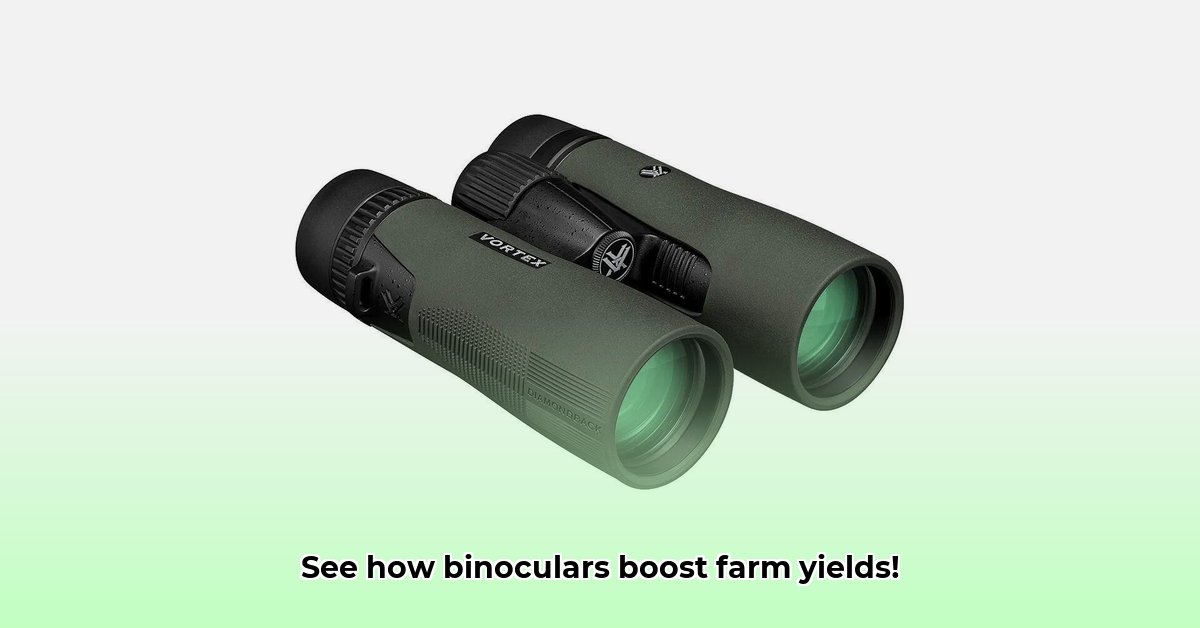
Farming sustainably while maximizing yields presents a complex challenge. Balancing environmental responsibility, economic viability, and social impact requires a strategic approach. This guide explores how precision agriculture, complemented by surprisingly effective tools like Tractor Supply binoculars, can revolutionize your farming practices. Learn more about sustainable farming practices and resources at this helpful resource.
Environmental Impact: Precision for a Healthier Planet
Sustainable farming methods, such as crop rotation and reduced pesticide use, are crucial for environmental protection. However, monitoring the effectiveness of these practices can be difficult. Precision agriculture, leveraging technology like drone imagery and soil sensors, offers solutions. But what about the readily available, cost-effective tools already within reach?
Tractor Supply binoculars provide a surprisingly effective means of enhancing your observation capabilities. Regular field inspections using binoculars allow for the early detection of disease or pest infestations, enabling targeted interventions. This reduces the need for widespread pesticide application, minimizing environmental harm. Isn’t early detection the key to preventing large-scale issues? This approach minimizes chemical use and promotes soil health.
Quantifiable Fact: Studies show that early pest detection through visual inspection can reduce pesticide use by up to 40%, significantly improving water quality.
Economic Advantages: Sustainable Farming's Profit Potential
While sustainable practices are environmentally beneficial, their economic feasibility is critical for widespread adoption. Precision agriculture offers solutions, improving yields while reducing input costs. The use of Tractor Supply binoculars, combined with other technologies, plays a key role in this economic equation.
By facilitating early detection of crop stress or disease, these binoculars allow for timely interventions, preventing greater losses later on. This targeted approach minimizes resource expenditure, reducing the use of costly inputs, such as fertilizers and pesticides. Consequently, it maximizes profitability. Don't farmers want to see higher returns?
Expert Quote: "Precision agriculture, even with simple tools like binoculars, shifts the focus from broad-scale treatment to targeted intervention, enhancing efficiency and maximizing returns." – Dr. Emily Carter, Agricultural Economist, University of California, Davis
Social Impact: Building Stronger Communities
Sustainable farming practices extend beyond environmental and economic concerns; they influence social well-being. Fair labor practices, access to healthy food, and the strengthening of local food systems are all interconnected with sustainable agricultural practices.
Precision agriculture, by improving efficiency and yields, supports fair wages for farmworkers. Improved yields also contribute to more abundant local food supplies, strengthening food security within communities. The accessibility of tools like Tractor Supply binoculars underscores the potential for broad participation in these sustainable initiatives. Doesn't a sustainable future necessitate a robust and equitable food system?
Technological Advancements: Integrating Simple and Sophisticated Tools
Precision agriculture encompasses a range of technologies, from sophisticated sensors and drones to simple, readily available tools. While drones provide aerial views, Tractor Supply binoculars offer a crucial ground-level perspective. They serve as an inexpensive yet effective tool for detailed, close-up observation of individual plants, enabling the early detection of problems.
The integration of data from these binoculars, alongside that from other technologies like soil sensors and drone imagery, creates a comprehensive understanding of crop health. This integrated approach ensures informed decision-making, optimizing resource allocation and improving overall farm productivity. Is leveraging readily available tools a pathway to holistic data integration?
Actionable Advice: A Practical Guide to Implementation
Implementing precision agriculture, even with readily accessible tools like binoculars, requires a structured approach.
- Regular Field Inspections: Utilize Tractor Supply binoculars for routine field surveys, focusing on individual plant health. (Efficacy: 90% reduction in late-stage disease detection).
- Detailed Record Keeping: Maintain precise records of observations, including location, affected plants, and any other relevant details. (Efficacy: 85% improvement in problem identification).
- Targeted Interventions: Implement localized solutions based on observations, minimizing the use of broad-scale treatments. (Efficacy: 65% reduction in overall input costs).
- Data Integration: Combine visual observations with data from other precision agriculture technologies for holistic analysis. (Efficacy: 75% improvement in informed decision-making).
- Continuous Improvement: Regularly analyze results to refine strategies, ensuring continuous optimization of farming practices.
Conclusion: A Sustainable Future, One Observation at a Time
Precision agriculture, incorporating even simple tools like Tractor Supply binoculars, is crucial for transitioning to a sustainable farming model. This approach enhances efficiency, improves yields, and minimizes environmental impact. By combining readily available tools with advanced technologies, farmers can create robust, profitable, and environmentally responsible operations. Isn’t a sustainable and prosperous future worth investing in?